

Never miss a resident request
AI receptionist for resident requests, visitors, and maintenance. Callovyn answers in the building’s name. A person confirms. Building operations — not healthcare, emergency monitoring, or clinical services.
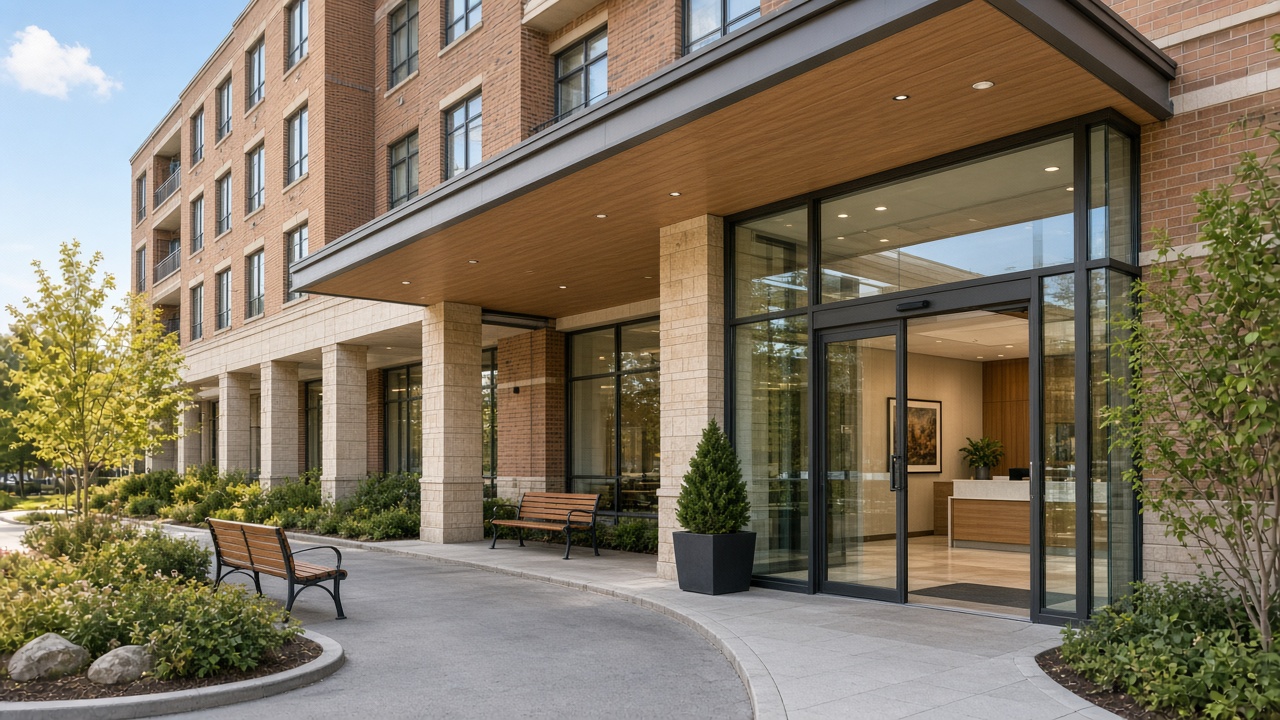
What the desk takes
Unit or address, name, number, lockout or maintenance, contractor or visitor, and when they need someone there. Staff confirm before anyone is told a time is set.
What stays off
No care plan, medication, diagnosis, or health card. The desk does not confirm who lives in a unit, unlock a door, or give an access code. It is not a replacement for an emergency response system.
Who this is for
Private seniors apartments and, after screening, private independent-living residences that do not provide personal care. Same desk as other ordinary Canadian businesses. One profile, not a second product.
How you start
Eligible private buildings can sign up. Public housing, licensed supportive living, continuing care, and any site that provides personal care cannot self-serve — leave a question below. Paying does not make a line live.
For example
A family asks what time visitors can come and reports a dripping tap in suite 204. The desk takes the request. It does not give care advice.
Same Callovyn desk as every other Canadian business. The industry is a profile, not a second product. Staff confirm before anyone is told they are booked. Public pages do not show prices.
Alberta: classify the building, not “seniors”
Privacy rules follow the operator, the licence, the services on site, and the information the desk would handle. They do not follow the age of the residents. These pages are not legal advice. The building remains responsible for its own privacy and safety duties.
Private seniors apartment
Ordinary housing run by a private organization. Alberta’s Personal Information Protection Act (PIPA) generally applies. Suitable for an initial pilot after screening. Collect only what the job needs.
Private independent-living
PIPA may apply. Licence and services still have to be checked. Suitable after screening if the site does not provide personal care. If care is on site, this path closes.
Public housing management body
Alberta’s Protection of Privacy Act (POPA) may apply to public bodies, including some housing management bodies. That is a separate privacy review. Not self-serve.
Licensed supportive living
Continuing Care Act and accommodation standards. Privacy duties depend on the operator and the data. Manual compliance review. Not self-serve.
Continuing care home
Continuing Care Act, and potentially the Health Information Act (HIA) if health information is involved. Do not self-serve. That is not this product path.
Federal overlay
PIPEDA is the federal commercial rule. In Alberta a private organization is usually under PIPA; a public body may be under POPA. We do not pick the statute from the word “senior.”
Alberta’s own summaries: OIPC — privacy laws in Alberta. Continuing care rules: Alberta continuing care.
Emergencies, lockouts, and urgent maintenance
For seniors these distinctions matter more than they do for a plumber or a cleaner. The desk follows the building’s approved contacts. It does not replace 911 or a monitored emergency system.
Urgent maintenance
“Unit 306, the bathroom is leaking.” The desk takes the unit, name, number, and the job. If the building marks it urgent, it alerts or transfers to the designated maintenance contact. It does not say a tradesperson is already on the way.
Lockout
“I cannot get into my apartment.” The desk takes the request and contacts authorized staff. It never unlocks a door, reads an access code, or gives one out.
Fall or medical emergency
“I fell and I cannot get up.” The desk tells them to call 911 and, where a transfer number is set, offers to connect them to that person. It does not claim emergency monitoring, guarantee that help has been dispatched, or take the call as a work order.
What we can show about the server
A manager can ask how resident information is protected. Here is what the product actually does today, and what we have not packaged yet.
On our application database
Name, phone, unit or address, the job in their words, and a preferred time. Each building’s records are locked to that building. Transport is encrypted. The database is encrypted at rest. Call audio is not stored.
Canada hosting, said accurately
Production hosting of our application database is planned in Canada. The line does not go live until that Canada host and a permanent phone webhook are on. Phone, AI, email, and payment are separate processors. A database in Canada does not mean every vendor processes information only in Canada. Alberta PIPA can require disclosure of service providers outside Canada.
Call history window
Call name and number are removed from the call-history table after 7 days. Minutes stay on reports. We have not published a deletion proof across phone, AI, email, backups, and every integration.
Health detail
Healthcare processing stays off unless a later clinic path is separately authorized. If a caller volunteers a health card or diagnosis, the product tries to strip it before a request is saved. That behaviour is tested on saved request text. We do not promise it across every AI log, vendor, or error path.
There is not yet a packaged security binder (data-flow diagram, customer DPA, incident-response policy, insurance certificate). Before a senior building is marked live we complete a privacy and security review on the file. Current public rules: Security · Privacy · Policies.
What we ask before a line is activated
Signup and demo ask these for a senior building. If the answers show public housing, licensed care, healthcare processing, or an unclear classification, self-serve stops and a person reviews.
Operator and licence
Private or public. Ordinary housing or licensed supportive living. Whether healthcare or personal care is provided.
Authority and contacts
Who may sign. Who receives after-hours calls. Who is alerted for urgent maintenance. Who owns building safety.
Information limits
What the desk may collect. Occupancy and other residents stay off. Access codes stay off.
Send this proposal a question
A building manager writes. We get a notice and the same form in email. A person replies. Eligible private apartments can also sign up on the existing packages.